Peptide Materials Research Review opens the materials drawer
A skin layer, a blood protein, a second ingredient: seemingly supporting materials can decide what a peptide experiment means. Start at the membrane clamp.
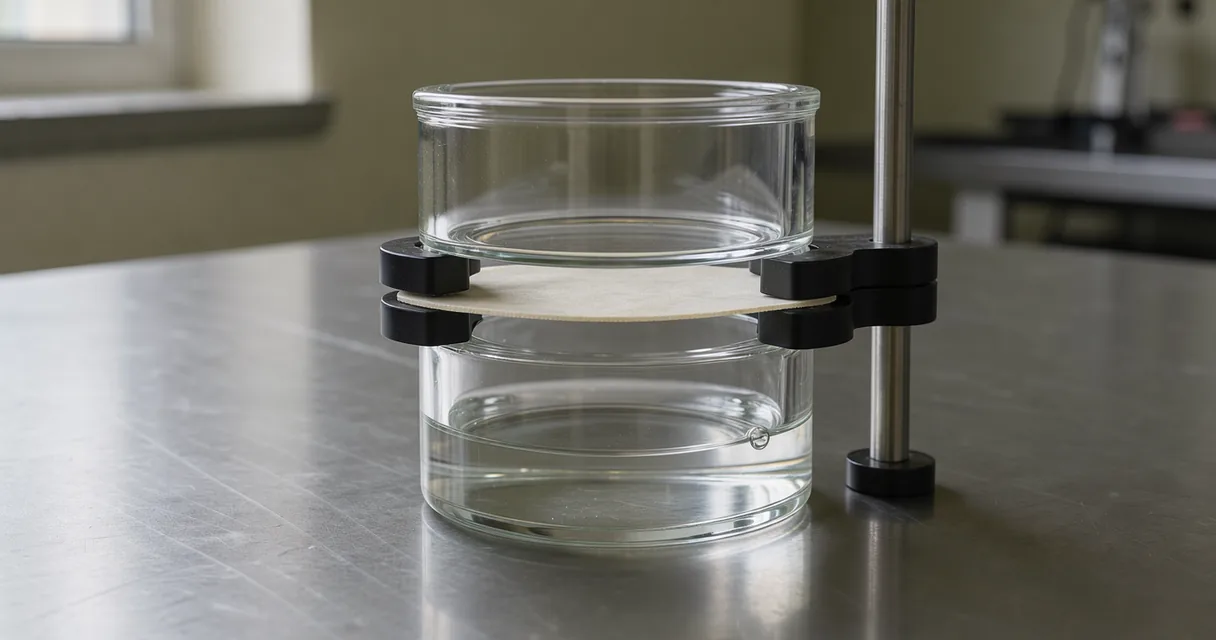
Copper across prepared skin
In a GHK-Cu penetration experiment, the researchers measured copper crossing human skin that had been removed and prepared for laboratory testing. They also measured copper remaining in the skin. The observation ran over 48 hours. Nobody’s wrinkles were being scored; the question was where the copper went.
I expected copper chemistry to be the interesting part. Instead, the skin preparation became the centre of the experiment for me. A cell in a dish has no outer skin layer standing between it and the substance under investigation. Put that layer back into the question and the experiment becomes much harder.
The review of topical GHK delivery describes just this difficulty: the peptide mixes poorly with fats, while the skin’s outer barrier is rich in them. Some copper crossing prepared skin and poor penetration through a barrier can both be true. The material confronting the peptide helps explain the apparent disagreement.
Albumin in the background
The accompanying material can also be something the body supplies. Albumin, an abundant blood protein, is central to the long action of CJC-1295 DAC. The peptide’s added attachment binds it to albumin. In the rat experiments that identified CJC-1295, that chemistry prolonged its presence and the growth-hormone response.
Semaglutide also uses albumin binding, although its attachment is reversible. Its chemical modifications prolong a GLP-1 signal involved in blood sugar and appetite. The semaglutide safety review supplies the pharmacological background; the weight trial asks a further question about people with overweight or obesity.
I like albumin’s economy as a carrier already circulating in blood. My admiration thins out when ingenuity supplies the entire case for treatment. The CJC-1295 studies measured hormone changes; semaglutide’s larger trials went on to measure weight and serious illness. Those are different achievements.
Companion ingredients
The hair trial involving GHK tested a complex containing GHK and another active ingredient. The men’s hair counts improved compared with placebo, but the experiment assigned the result to that combination. Giving the whole finding to GHK-Cu alone would quietly change the contents of the study.
I object to ingredient lists that shrink between a trial and its retelling. The extra ingredient, the carrier, the prepared membrane: each can look dispensable in a short description. Each can determine what was actually tested.
There is a limit to how far this fascination with materials can go. Thymosin Alpha-1’s largest sepsis trial supplied a disappointing clinical answer despite the biological rationale. Correct identity and an intact peptide make an experiment possible. The patients still have to benefit.
Browse the materials
The GHK-Cu essay stays with the skin barrier, copper binding and the mixed-ingredient hair trial. CJC-1295 follows an albumin attachment into the human hormone measurements.
Semaglutide moves from carrier chemistry to weight, heart and kidney trials. Thymosin Alpha-1 takes up immune modulation and the sepsis results that complicated its reputation.
The materials inventory puts these experiments alongside one another without pretending the compounds compete for the same job. The reading list contains the original papers and reviews.